



Description
HappyHerbalist’s Raw Live All Natural Goat Kefir Grains. Born, raised and fed on a small all natural Goat Farm
supplies are limited and may vary upon the seasons.
Free Shipping (USA) • Worldwide ($15)
Make fresh, tangy milk kefir at home with our live grains—never frozen or dried. With regular care, the grains can grow and be reused for batch after batch.
What You Receive
-
Approximately 3–5 grams of live milk Goat Kefir Grains —about one teaspoon
-
Our Simple Start Recipe Guide
-
Text support to help you get started
Once established, this quantity can typically ferment 1–2 cups of milk daily. Results vary with temperature, milk type, fermentation time, and grain activity.
Getting Started
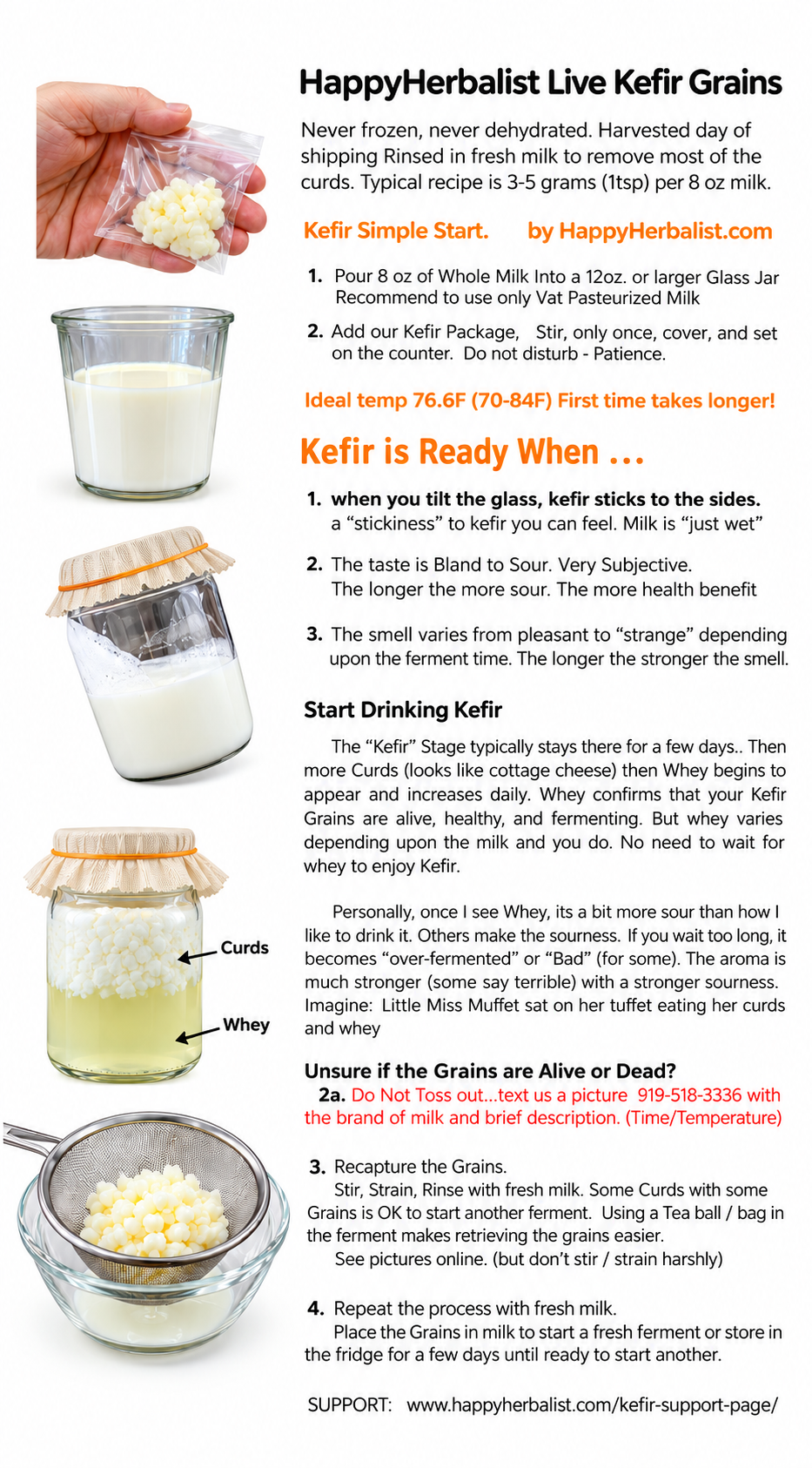
Follow our Simple Start Guide to help your grains adjust after shipping. For the most consistent start with our method, use vat-pasteurized milk and avoid ultra-pasteurized or UHT milk. Check with the milk producer if the processing method is unclear.
After the grains are working consistently, you can experiment with other dairy milks, including goat milk. Plant-based milks produce different results, and milk kefir grains may need periodic refreshment in dairy milk.
What Is Kefir?
Milk kefir is a cultured milk drink made with reusable clusters of bacteria and yeasts called kefir grains. The grains resemble small pieces of cauliflower.
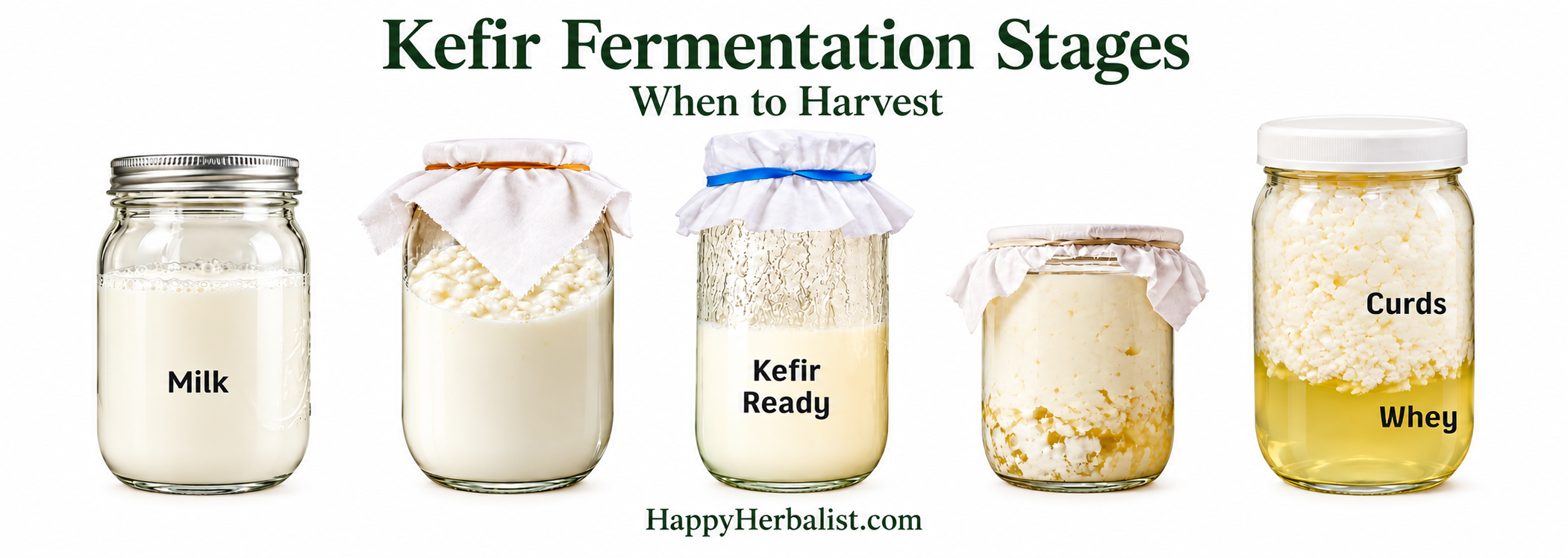
Finished kefir is usually pourable, slightly thicker than milk, and pleasantly tangy. Longer fermentation generally produces a stronger sour flavor and may cause separation into curds and whey.
Strain out the grains when your kefir reaches the flavor and texture you prefer, then place them in fresh milk for the next batch.
Shipping and Support
We pack our grains in heat-sealed, food-grade packaging. If your package arrives damaged or you have concerns about its appearance or activity, contact us with a clear photo before discarding the grains.
Text 919-518-3336 or email HappyHerbalist@me.com.
30-Day Satisfaction Guarantee
Return any product within 30 days of purchase for a full purchase price refund. Products must be returned in good condition. Shipping charges are not refunded, and customers pay return shipping.
Helpful Resources
Your Free Kefir Guide
Our free, 30-page PDF guide covers getting started, daily grain care, vacation storage, smoothies, fruit additions, and kefir cheese spreads.
Explore our Online Library and Free Downloadable Books.
Which Milk Should You Use?
To get started with our Simple Start method, use plain, pasteurized whole cow’s milk. Vat-pasteurized milk is our preferred choice. Avoid ultra-pasteurized or UHT milk during the initial adjustment period.
Homogenized milk keeps the cream evenly distributed, making changes in texture easier to observe. Pasteurization and homogenization are different processes.
Wait until your grains are fermenting consistently before experimenting with goat milk, lower-fat milk, or other alternatives. Plant-based milks produce different results and may require periodic refreshment of the grains in dairy milk.
Milk brands can perform differently, so consistency helps while you establish your culture.
Basic Milk Kefir Recipe
After completing our Simple Start Guide:
-
Place approximately one teaspoon of active kefir grains in a clean glass jar.
-
Add one cup of pasteurized milk.
-
Cover with a clean cloth, paper towel, or coffee filter secured with a band.
-
Follow the fermentation time and temperature guidance in your recipe, checking for changes in texture.
-
When ready, strain out the grains and refrigerate the finished kefir.
-
Place the grains in fresh milk to begin another batch.
For a break between batches, store the grains in fresh milk in the refrigerator, following our guide’s storage instructions.
How Do You Know It’s Ready?
Typical signs include:
-
A thicker, pourable texture that lightly coats the glass
-
A pleasantly tangy aroma
-
A mild to sour flavor, depending on fermentation time
-
Small pockets of whey beginning to appear
Texture varies with the milk, temperature, grain activity, and ratio of grains to milk.
Understanding Curds and Whey
As fermentation continues, kefir may separate into white curds and pale liquid whey. This often means the batch has fermented beyond your preferred drinking stage.
Separation alone does not mean spoilage. However, kefir can spoil—discard batches showing mold or unusual discoloration, and contact us if you are unsure.
For a smoother consistency, gently stir the strained kefir. You can also blend it with fruit or use it in recipes. For thicker kefir, try straining the finished kefir in the refrigerator using the instructions in our guide.
Need Help?
Text a clear photo and a description of the problem to 919-518-3336.
Read our Kefir Recipe and Guide.
Milk Kefir, Water Kefir, and Ginger Beer Plant
Water kefir and milk kefir are different cultures. Milk kefir grains are traditionally used in dairy milk, while water kefir grains ferment sweetened water. Ginger beer plant is another distinct culture used to make fermented ginger drinks.
These cultures contain both bacteria and yeasts. Lactic acid bacteria contribute a pleasantly tangy flavor, while yeasts help produce carbonation and alcohol. The finished drink’s sweetness, acidity, and alcohol content vary with ingredients and fermentation conditions.
Milk kefir supplies protein and other nutrients from its milk base. Water kefir offers a dairy-free fermented drink when prepared with dairy-free ingredients and equipment. Neither is automatically healthier—the ingredients, remaining sugar, and your dietary needs all matter.
A Traditional Chinese Medicine Perspective
Within my traditional Chinese medicine approach, I view milk kefir as more Yin-nourishing and water kefir as more Yang in character. Ginger-based ferments have a warming character associated with the Stomach and Spleen functional systems.
These descriptions reflect a traditional framework rather than claims about treating disease or the functions of Western-defined organs.
Enjoying Kefir with Cocoa
For a rich chocolate flavor, stir unsweetened cocoa into finished milk kefir or blend it into a smoothie. Add flavorings after removing the grains so you can maintain your culture using its regular feeding recipe.
Cocoa contains fiber and plant compounds called polyphenols. Research has explored how cocoa flavanols interact with intestinal bacteria, but cocoa itself is not a probiotic, and adding it does not guarantee improved culture growth or health benefits.
Enjoy kefir plain, blended with fruit, in salad dressings, or as an ingredient in pancakes and other recipes.
30-Day Satisfaction Guarantee
Return any product within 30 days of purchase for a full purchase price refund. Products must be returned in good condition. Shipping charges are not refunded, and customers pay return shipping.
Help with Your Live Culture
If you are unsure whether your culture is working, contact us before discarding it. Text 919-518-3336 with:
-
Clear photos of your grains and ferment
-
The milk brand or other ingredients used
-
Your room temperature and fermentation time
-
The steps you followed and your concerns
We’ll help you troubleshoot and get started.
HappyHerbalist.com est 1997
5 REVIEWS
-
5 stars they devolope and grow pretty fast if you follow the directions directions
great product to help you stay healthy.
-
Goats Milk
Great Service, Fast delivery
-
Goat's milk kefir grains
Very happy with this product, and getting in the swing of making kefir. I am using a Mason jar with the screen lid (sold here) and preparing it in small batches -- about 1 cup at a time. Each batch is tasting better than the last.
-
kefir seeds
Amazing and delicious!
-
Improve Yout Gut Health
Great customer service! Great kefir products! Worth the initial investment because you get a better health benefit. At a greatly reduced price, over commercially produced kefir.
Additional Details
- SKU:
- GoatKefir DR Berg


