Browse Categories
Mailing Lists
Kudzu Bulk Powder
All natural bulk herb used widely in TCM and in cooking for health and longevity
Our Price: $9.95

Quantity Discounts

QuantityAmount
4 to 7$7.96
8 to 12$6.97

Detailed Description

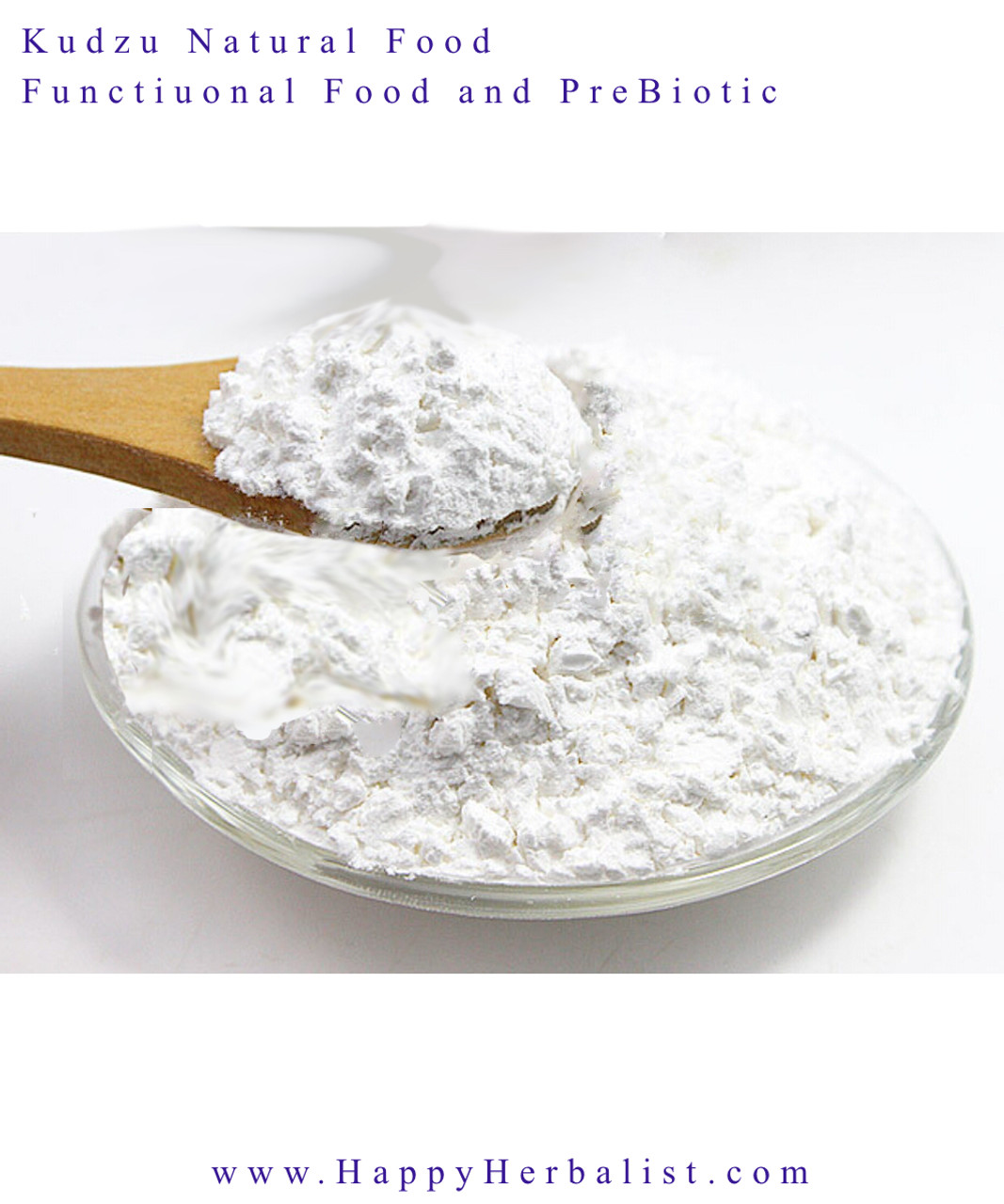
Kudzu Bulk powdered herb 4 ounces (120 grams) One gram equals 1,000 milligrams. This is simply the kudzu root in a pure powder form. There are no additives, fillers or other herbs. Kudzu Resue is a 5:1 concentration of the root with a minimum 25% isoflavones. (19% puerarin, 4% daidzin, and 2%  daidzen). The same herb, different concentrations.

According to Traditional Chinese Medicine. Kudzu (Ge Gen or Puerariae Radix) Releases the exterior, relaxes the muscles and clears Heat: Used to treat disorders causing muscles aching, stiff neck and upper back, fever, headache. Nourishes the fluids and alleviates thirst: Used to treat wasting-thirsting and thirst due to Stomach Heat. Vents rashes: used in the early stages of rashes with dormant papules such as measles. Stops diarrhea: Used to treat diarrhea and dysentery associated with damp-heat. Lower blood pressure: Used to treat hypertension with headache, dizziness, tinnitus, and angina pectoris. This is a major herb in the Chinese herbal arsenal and has been used extensiively dating back to the Shan hung Lun about 2,500 years ago. It has also been used in the rescent SARS epedmic and no doubt be instrumental in any Bird Flu formula - as a preventaive or very early onset. Additionally Kudzu has found interests in the study of withdrawels. (see referrnces cited below and more information on the link below). IMO, Kudzu may not stop the actually desire to drink or partake. Its noted effects are along the body aches, temors and distress caused by the physical withdrawing of the abuse substance. The symptoms not the cause. In that effect it would be particulay well suited along those lines established by Traditional Chinese Medicine. In its function of releasing the exterior and expelling rashes - the toxins from the body. The body stiffness and aches that Kudzu addresses are those toxins as well as the chemical dependency that is being fought off. Thus Kudzu helps the body to recovery.

Normal TCM dosage 6 to 12g. note: The dosage most often cited in the western studies are 900 mg. For angina pectoris, practitioners of traditional Chinese medicine recommend 30 to 120 mg of standardized tablets of kudzu root two to three times daily. Ten mg of a standardized tablet equals 1.5 g of the pure root. Tinctures of 1 to 2 ml three to five times daily are recommended in place of tablets. To help lower cravings for alcohol, the recommended dosage is 3 to 5 g of kudzu root three times daily or 3 to 4 ml of tincture three times daily. The All-In-One-Guide to Natural Remedies and Supplements recommends drinking kudzu tea to combat alcoholism. An alternative form of treatment involves taking 1500 mg supplements or cubes before or after the alcohol. The 1500 mg can be divided equally into three daily doses. Kudzu also may be combined with St. John's wort to treat the symptoms of alcoholism. note: as a herbal pharmacy we will make up any herbal extract to your specifications, just email us.

The problems of manufacturing kudzu root as a drug to treat alcoholism and other disorders were outlined in an article on Traditional Chinese Medicine by Dr. James Zhou. Zhou says that herbs lose their natural balance when manufacturers purify, refine, and treat them with chemicals. The daidzein, in kudzu could treat alcoholism, but the purification process destroys the isoflavone balance. Because it is the isoflavone puerarin in kudzu that stops cardiovascular damage impairment and may prevent an alcoholic side effect, liver damage, Zhou believes that the herb should be given in its natural state.  However, another study of a  successful 2005 clinical trials, before they commenced the trials the examined several different sources of kudzu and found that none of them were idientail to any makeup. (s far as standardizations are considered, not as far as food value or herbal properties). Since they wanted a more "scientific" answer they standarized their doses They found three daily doses totally 3,000 mg. of a standarized  kudzu. In that study they used prepared capusles  19% puerarin, 4% daidzin, and 2%  daidzen (minimum 25% isoflavones). note those values (as well as a complete support program, are avaulable in capsule form at www.mywayout.org  we do supply those capsules as well. See below. They standardized capsules obtained the best results in recent clinical trials and therefore concluded  that most over the counter kudzu products do not contain biologically effective isoflavane concentration, so the suggested dosage “per milligram” of 900 mg remains controversal.

CAUTIONS & CONTRAINDICATIONS: None of significance noted.  source: Chinese Herbal Medicine Materia Medica Bensky/Gamble Rev ISBN 92-074516 For the dosages stated for TCM fomulas.  It’s imperative to consider your individual health requirements. The variability in dose (in the above cited studies) reflects the fact that we have not been able to find any long-term studies in patients with endometriosis,  reproductive cancers, who are pregnant or breast feeding women, or have diabetes. While almost all sources claim kudzu is completely safe, and practitioners of Traditional Chinese Medicine have used the herb safely for hundreds of years, again, we wish to err on the conservative side when adopting high levels of any herb over the long term.

The isoflavanoids in kudzu belong to a chemical group called phytoestrogens, which are believed to contain the active anti-craving ingredient. These phytoestrogens may exhibit weak effects similar to the female hormone estrogen (an advantage for menopausal women, who may benefit from reduced hot flashes and other symptoms, according to one study. These phytoestrogens may also prevent bone loss, improve memory and reduce cholesterol within this same population, but additional research is needed.) In other studies, kudzu was shown to reduce blood levels, so individuals with diabetes need to use the herb with caution and monitor blood levels closely.

examples of some studies. available on MEDLINE or click our link below

Kudzu root: an ancient Chinese source of modern antidipsotropic agents. Keung WM, Vallee BL.Center for Biochemical and Biophysical Sciences and Medicine, Harvard Medical School, Boston, MA 02115 USA.

Kudzu (Pueraria lobata) is one of the earliest medicinal plants used in traditional Chinese medicine. It has many profound pharmacological actions including antidipsotropic (antialcohol abuse) activity. Although both the roots and flowers of kudzu, Radix and Flos puerariae, respectively, have been used to treat alcohol abuse safely and effectively in China for more than a millennium, their true efficacy, active constituents, sites and mechanisms of action have never been critically examined. Recently, we have demonstrated that a crude extract of Radix puerariae suppresses the free-choice ethanol intake of ethanol-preferring golden Syrian hamsters and have identified two of its isoflavones, daidzin and daidzein, that account for this effect. Since then, we and other investigators have confirmed these findings in rats that were either trained or genetically bred to prefer and consume large amounts of ethanol. This article summarizes recent progress on the pharmacological and biochemical studies of the antidipsotropic isoflavones isolated from Radix puerariae.

PMID: 9461670 [PubMed - indexed for MEDLINE]

A pilot study exploring the effect of kudzu root on the drinking habits of patients with chronic alcoholism.
J Altern Complement Med. 2000 Feb;6(1):45-8.


Related Products

detox
Detox-Kit
Our Price: $39.95
Detox-Kit
homeopathic program easy to use, easy to follow. convenient oral drops
kefir
Kefir Live Grains.
Our Price: $14.95
Kefir Live Grains.
Live Grains that will continue to grow and reproduce. A true gift and lifelong friend.
Kudzu Capsules
Our Price: Out of Stock
Kudzu Capsules
130 caps 300 mg

Product Reviews

(0 Ratings, 0 Reviews)
Search
Shopping Cart
Your cart is empty.